
Acquiring a new customer is an achievement on its own, but not the only way to build your business. Another is upselling vs cross-selling by expanding the value of each transaction, also known as the average order value, without customers ever feeling you’re forcing a sale. And here’s a key difference to explain to sales teams, founders and entrepreneurs: up or cross-selling.
What is Upselling?
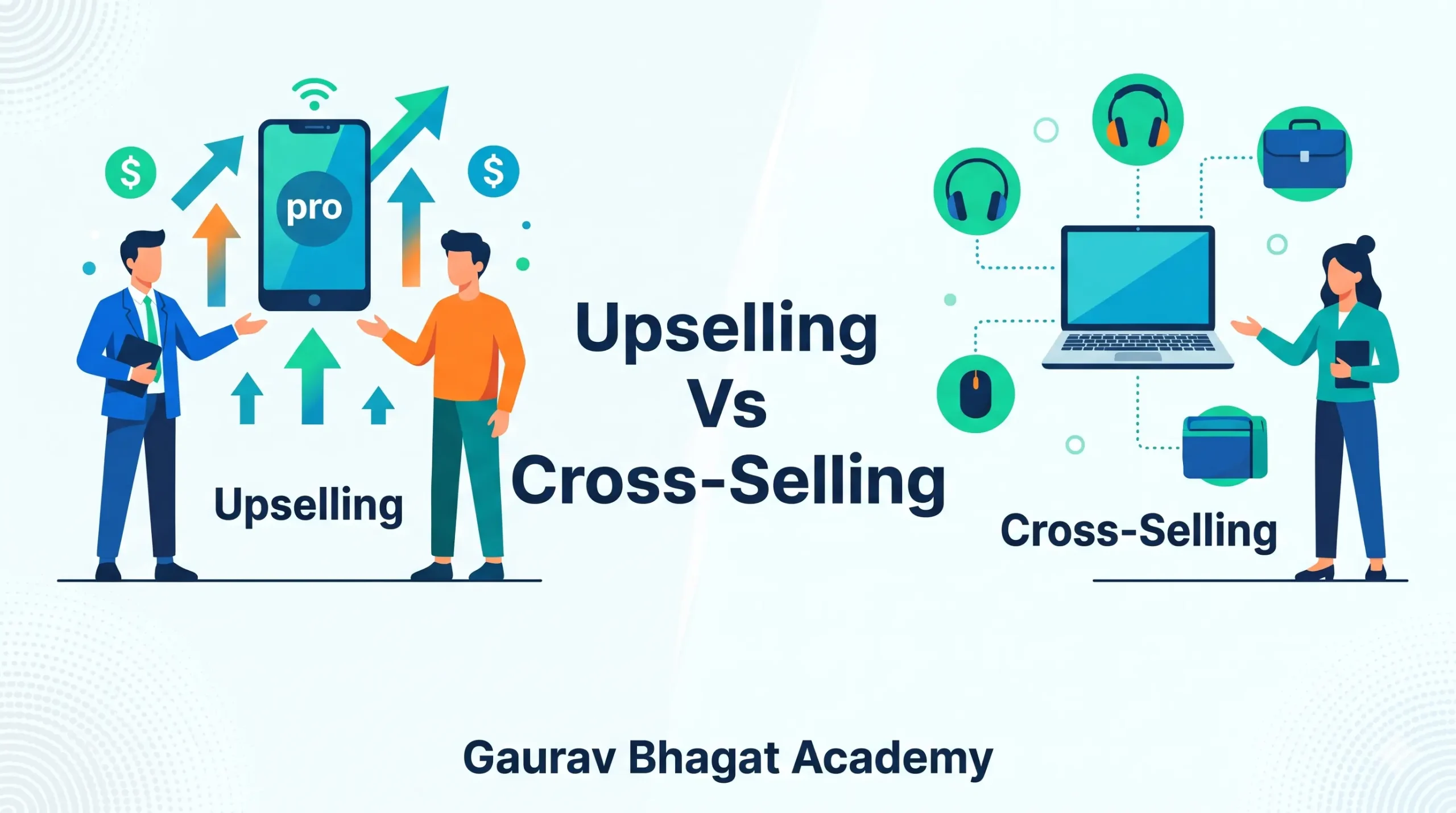
Upselling is the act of selling an upgraded product or service to a customer who is already interested in purchasing. The product or service to be upsold is a variation of the one originally considered by the customer. Say a customer who is looking at a smartphone with 128 gb storage often keeps pictures, videos or other large files on their device. The 256 gb version of the same model will be more expensive but may also be a better fit. Another common example: a restaurant providing a customer with the ability to upgrade from their regular drink to a larger drink. The product is the same, it is just a larger and more expensive version. The basis of good upselling is to give the customer value. The customer must see what they are getting, which is worth the price they pay.
What is Cross-Selling?
The practice of recommending a product or service that is an additive to the one that a customer has already selected. For example, a retailer might suggest that a customer also purchases a wall mount or sound bar when buying a TV, or an airline might promote airport transfers or travel insurance when someone books a flight. Cross-selling, on the other hand, does not use the initial selection as the beginning but simply offers the customer something else to help make his or her initial choice more functional and more complete.
A simple way to remember the difference is:
- Upselling:”You want the luxury model?”
- Cross-selling:”You want a pack of batteries to go with it?”
Upselling Vs Cross-Selling: Key Differences
The key difference being that the salesperson is proposing. Upselling is prompting the customer to buy a more expensive option; cross-selling is presenting a product or service that is related or complementary. The timing may be at various stages. Cross-selling can occur at any stage, before, during or even after sales, where upselling is most suitable during the decision making process, so when the customer is choosing among the options. As a salesperson, this distinction is good for you to know, as a wrong approach is often received as meaningless or could risk sounding like a hard sell.
How to Use Upselling and Cross-Selling Without Being Pushy
Relevance is the foundation for effective sales. Not pressure. Your business can implement these four principles to make your recommendations more relevant:
1. Know what the customer wants
Do not “upsell” or “add-on” any product just to raise the dollar value. Know the needs, wants, histories and buying intentions of the customer.
2. Focus on value
What does the customer get in return for parting with a little extra? Up-sells and cross-sells must serve an authentic purpose and just add value to a current sale or transaction.
3. Choose your timing wisely
Timing is everything – a nudge made at the correct moment, should be much more targeted and actionable There may be opportunities for nudge throughout the customer journey that are appropriate for the different types of advice: product page, sales call, checkout page, post-purchase.
4. Personalise wherever you can
A mixture of purchasing history, preferences and behavioural data can sometimes provide more relevant suggestions. Automation can help sales teams and ecommerce sites recommend relevant products or services without overwhelming customers. It is simple: “Remember the benefit, not just the sale.”
Why these approaches are important to drive business growth
But for founders and sales leaders, your business doesn’t always have to grow through new customers. You have the opportunity to deepen the revenue you’re already receiving from your existing customers.
Ultimately, using upselling and cross-selling effectively means your business can increase the value of transactions, providing customers with products and services that meet their needs more effectively. This may contribute to a more compelling customer experience, as well as increase potential for a more meaningful relationship. Even for businesses that are building scalable sales processes, these techniques can enable sales teams to evolve from closing deals into a deeper understanding of what the customer needs and providing better solutions.
Conclusion
Ultimately, upselling is providing an upgraded product or service that the customer has ordered. Cross-selling means offering a related product or service that, in some way, enhances the original purchase. The goal for a business shouldn’t be the size of the bill. It should be to know the customer well enough to make the next recommendation, truly useful. When relevance, timing and trust are the priority, the bigger transaction is simply the icing on the cake of a better sales experience.




No comment